Why You Have No Drive Anymore
Loss of Motivation, Low Energy, and How to Rebuild Momentum Without Forcing Yourself
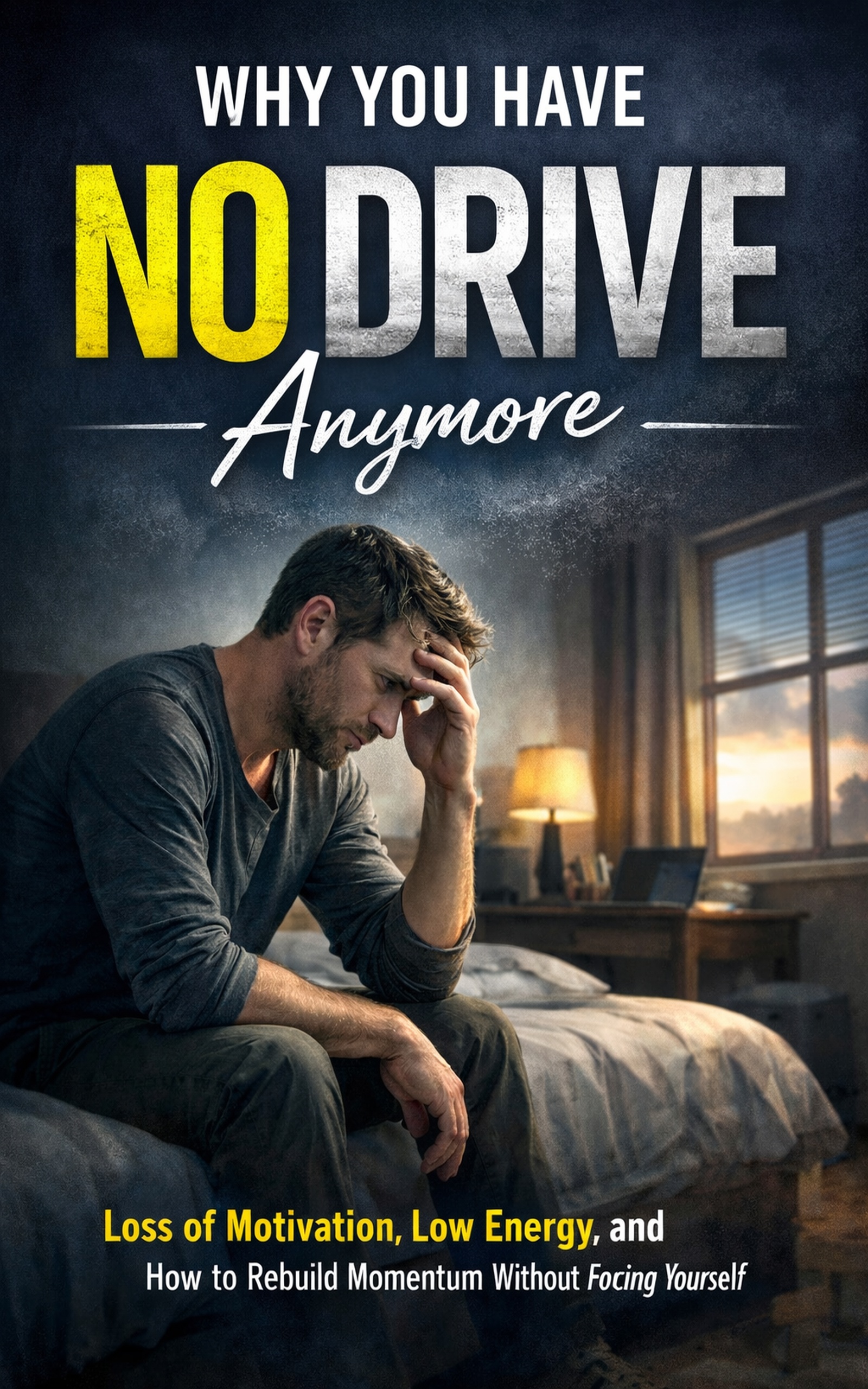
When you have no drive, even simple tasks can feel heavy. You do not feel lazy, you feel flat, slow, and strangely resistant to things you used to handle without thinking.
This book explains why motivation often disappears when your energy is depleted. It breaks down how prolonged stress, constant pressure, and mental overload can reduce capacity, dull interest, and make action feel like effort without reward.
You will learn practical ways to rebuild momentum without forcing yourself. The aim is not to manufacture motivation, it is to create conditions where action becomes easier and progress feels possible again.
- Understand why low energy changes motivation and follow through.
- Learn how pressure and self criticism can block action.
- Recognize shutdown patterns like avoidance, numbness, and drifting.
- Learn how to restart with smaller steps that match your capacity.
- Recognize what helps momentum return, consistency, recovery, and friction reduction.
Overview
Loss of drive is often a capacity problem, not a character problem. When your system is running on low energy, motivation does not work the way it used to, and even small tasks can feel like they require too much effort.
This guide shows how to understand what is happening and respond with practical adjustments. It focuses on reducing pressure, restoring basic energy inputs, lowering friction, and rebuilding momentum through small actions that fit your current bandwidth.
Who this book is for
This is for people who feel like they have lost their motivation and do not recognize themselves. You might be running on low energy, struggling to start, or feeling numb about things that used to matter.
It is also for anyone coming out of a high pressure season who cannot just switch back on. If you are tired of forcing yourself, relying on guilt, or waiting for a sudden burst of drive, this book offers a calmer way to rebuild momentum.
How to use this book
Start with the sections that match your pattern, low energy, pressure overload, avoidance, or emotional flatness. Read with a practical lens. Notice what drains you, what adds friction, and what triggers the urge to push harder.
Pick one small area to restart. Use the prompts to reduce the size of the next step, lower the cost of starting, and build a simple rhythm you can repeat. Revisit the recovery and momentum sections whenever you notice yourself slipping back into forcing.
What you will learn
- Why motivation drops when energy is low, and why willpower stops working.
- How prolonged stress and pressure reduce capacity and dull interest.
- How avoidance, procrastination, and numbness can be protective, not moral failures.
- How to reduce friction and restart with smaller, more workable steps.
- How to rebuild momentum through consistency, recovery, and realistic pacing.
- How to track progress without using guilt, comparison, or self punishment.
Frequently asked questions
Is this about discipline or willpower
No. The focus is not forcing yourself through exhaustion. It is understanding why drive fades, then using practical changes that make action easier again.
What if I feel unmotivated but still have things to do
The book helps you work with your current capacity. You will learn how to shrink the next step, reduce friction, and build a simple rhythm that keeps you moving without relying on pressure.
Is low drive always burnout
Not always, but burnout and mental exhaustion are common reasons. The book covers how to spot overload patterns, when you are drained versus disengaged, and what to adjust first.
How do I rebuild momentum without forcing myself
Momentum returns when starting becomes cheaper. The book gives small step methods, energy friendly planning, and ways to remove hidden costs so action feels more doable.
What if I start, then stop again
That is common when recovery is still in progress. You will learn how to build a restart plan that expects dips, avoids all or nothing thinking, and protects your energy instead of draining it.
Is this a guarantee
No. This is an informational guide with practical steps you can try. Results vary by person and situation, but the goal is to give you a clearer way to understand what is happening and respond more effectively.
Get the book
Available on Amazon in ebook and paperback formats.