Why You Feel Numb After Burnout
Emotional Exhaustion, Loss of Motivation, and How to Recover
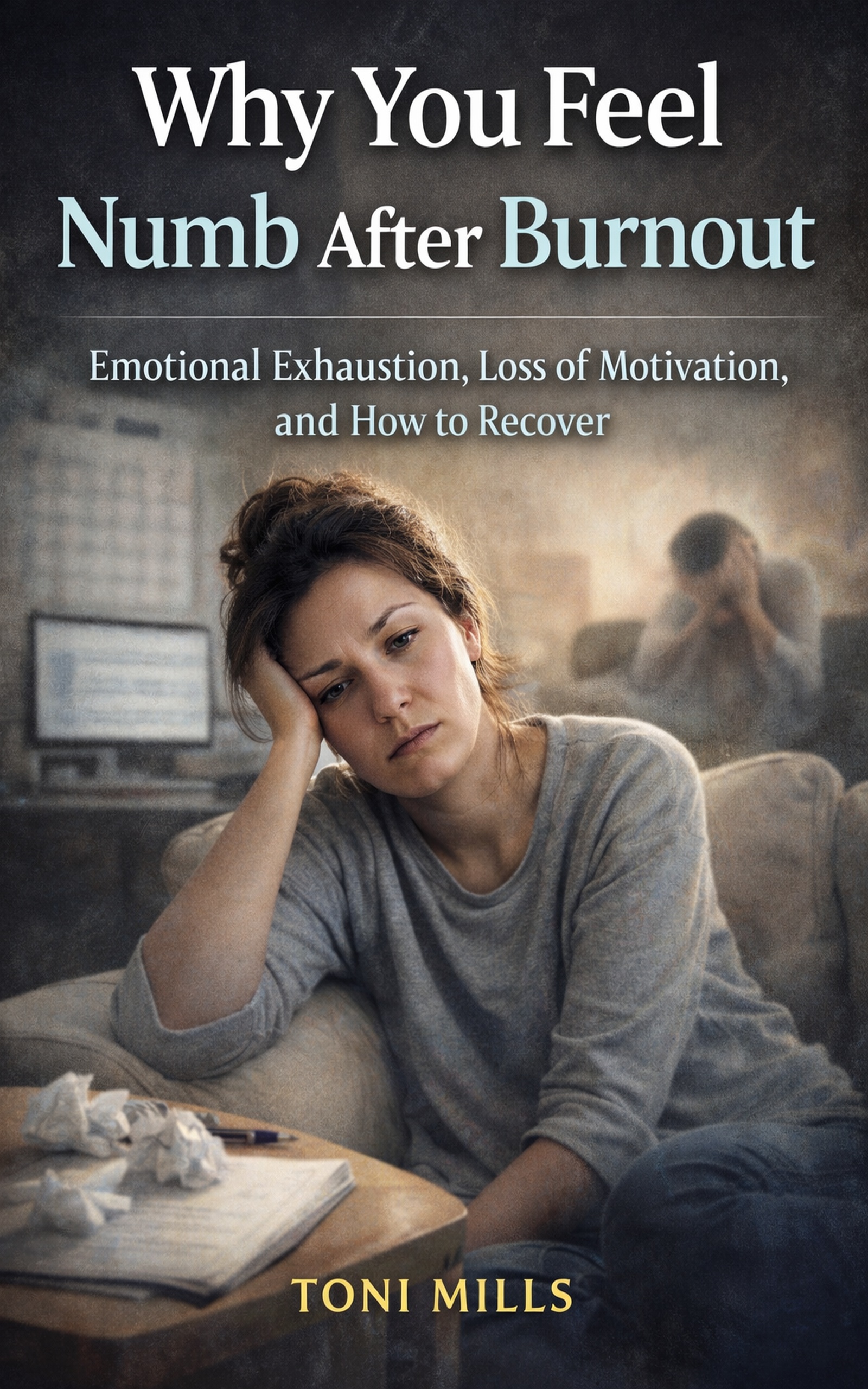
Burnout does not always end with relief. Sometimes the pressure drops and your inner life goes quiet, enjoyment feels distant, motivation disappears, and even strong reactions arrive muted. This book explains numbness as a protective shutdown that can follow prolonged stress. It shows how to rebuild capacity first, then invite feeling and energy back in small, safe ways, without forcing intensity or rushing yourself.
- Understand what burnout related numbness looks like in daily life, and why it can feel unsettling.
- Learn how prolonged stress dulls reward, drains effort, and makes choices feel heavier.
- Recognize patterns that keep shutdown in place, including pushing, all or nothing habits, and harsh self talk.
- Use gentle reconnection steps that rebuild trust in your body, attention, and motivation over time.
Quick tools
- Lower the load for one hour. Reduce input, reduce choices, and do one small task to completion.
- Choose “safe effort.” Pick an action that is easy enough to repeat tomorrow, not a dramatic reset.
- Track small signals. Notice tiny shifts in interest, warmth, annoyance, or relief, without judging them.
Overview
Emotional numbness after burnout can look like functioning on the surface while feeling detached underneath. You may still do what is required, but pleasure fades, connection feels distant, and your inner response to life becomes quieter than you expect.
This book breaks down why that happens, how the nervous system reduces intensity after prolonged strain, and why motivation often goes offline at the same time. It then offers a practical recovery path, focusing on stabilizing capacity, reducing overload, and rebuilding conditions where feelings and energy return naturally.
Who this book is for
This book is for people who have come through a demanding period and expected to bounce back, but instead feel emotionally flat. If you keep thinking something is wrong because you cannot feel the way you used to, this guide is written for you.
- You get through the day, but enjoyment and interest feel muted.
- You feel like you are watching your life rather than living it.
- You want clarity about what is happening without being pushed to “feel more.”
- You notice motivation has dropped, and even simple tasks take more effort.
- You want a calm, realistic recovery approach that respects limits.
How to use this book
Start with the chapters that help you name what you are experiencing, so numbness stops feeling mysterious. Then move into the sections on motivation and overload, because understanding effort and reward changes how you plan your days.
Use the tools as small experiments. Pick one load reduction, one reconnection step, and one steadiness habit. Repeat them long enough to notice small signals, rather than measuring progress by big emotional moments.
- Use the “signs” sections to see your patterns across work, home, and relationships.
- Use time limits and simpler options when decision making feels draining.
- Build recovery around consistency, not intensity. Small steps protect momentum.
- Review weekly with practical markers, sleep, capacity, steadier routines, and fewer crashes.
What you will learn
- Understand why numbness can appear after prolonged stress and overload.
- Learn how shutdown differs from calm, and why that distinction matters.
- Recognize the everyday signs of burnout related numbness across life areas.
- Learn why pushing through often prolongs the problem and increases depletion.
- Use gentle reconnection steps that rebuild sensation, interest, and engagement safely.
- Rebuild motivation through smaller goals, clearer boundaries, and steadier effort.
- Create sustainable habits that reduce relapse risk and protect capacity.
FAQ
Is numbness after burnout normal?
It is common. When your system has been running beyond its limits, it can reduce emotional intensity as a way of protecting you from further strain. The goal is not to force emotion back quickly, it is to rebuild safety and capacity.
How is this different from feeling calm?
Calm tends to feel like relief and presence. Numbness tends to feel like muted sensation, distance, and a lack of natural response. The book uses that difference to guide what helps, rest and stabilization first, then gentle reconnection.
Why did my motivation disappear?
Prolonged stress can make effort feel heavier and rewards feel smaller. When the brain stops expecting a payoff, starting tasks becomes harder. The book shows how to rebuild motivation without pressure, using smaller steps and clearer decision rules.
Should I push through to “snap out of it”?
Pushing can keep you in the same loop of overexertion and collapse. A safer approach is steady, repeatable effort paired with load reduction, so your system has room to recover instead of bracing for the next demand.
How do I measure progress if feelings are not back yet?
Look for functional signs first, slightly better sleep, fewer crashes, easier decisions, small returns of curiosity, brief moments of warmth, and more capacity for ordinary tasks. The book treats these as early signals that reconnection is underway.
Get the book
If you feel emotionally flat after burnout, this book gives you a clear explanation of why it happens and what supports recovery. You will learn how to reduce overload, rebuild steadiness, and invite motivation and feeling back without forcing the process.