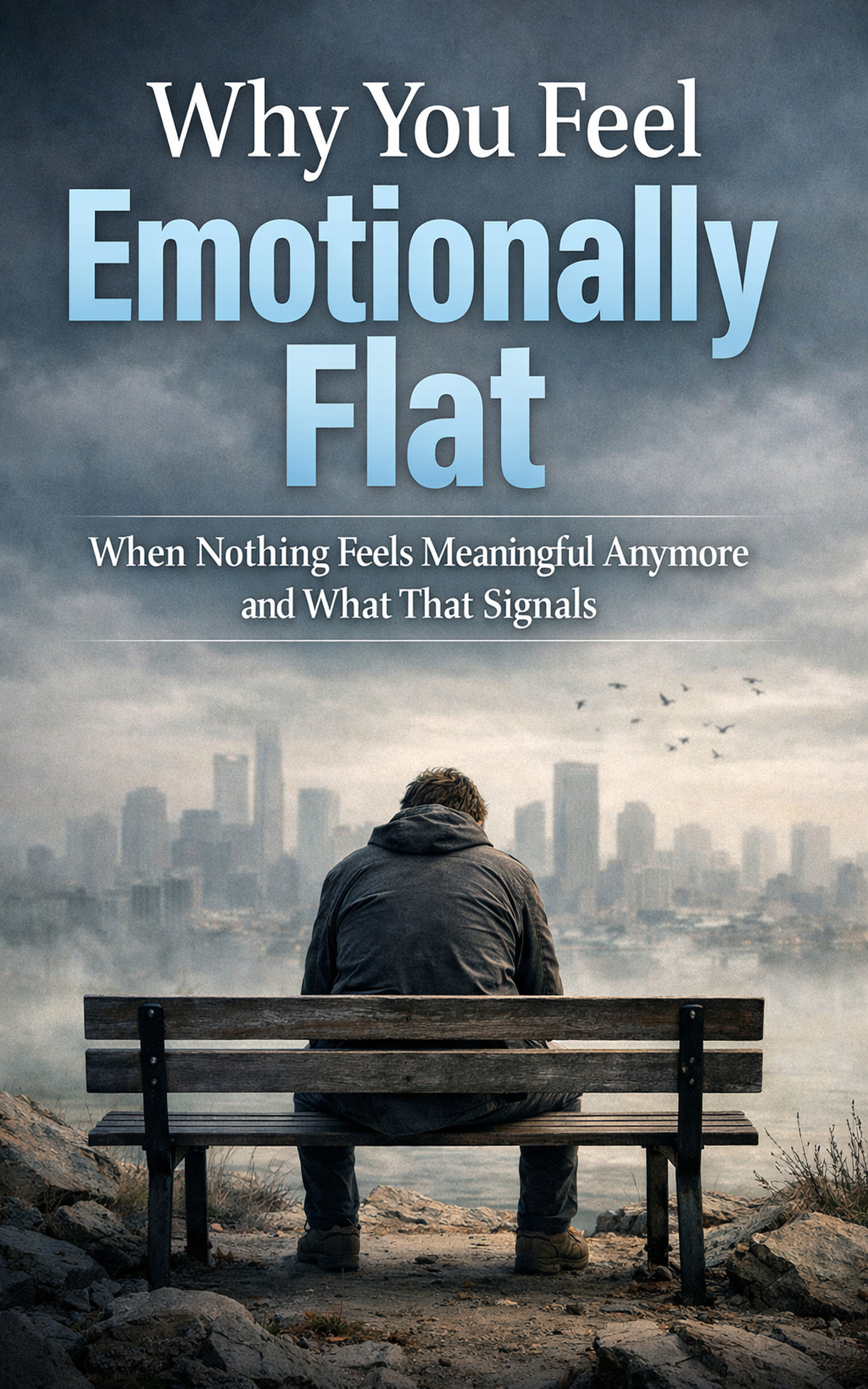
Why You Feel Emotionally Flat
When Nothing Feels Meaningful Anymore and What That Signals
Making a choice can feel like lifting a weight. You run the options, imagine what could go wrong, and keep looking for the one path that will not lead to embarrassment, loss, or regret.
This book explains why decisions start to feel unsafe for some people, even when the choices are ordinary. It breaks down how uncertainty triggers stress, how past criticism and perfectionism raise the stakes, and how overthinking can turn into avoidance.
You will learn simple ways to reduce decision strain, interrupt mental replay, and choose using clear, realistic criteria. The aim is not to force confidence, it is to make decisions manageable and move forward without constant second guessing.
- Understand why uncertainty and loss aversion can inflate risk.
- Learn how overthinking becomes a habit, and how to interrupt it.
- Recognize avoidance patterns like delay, reassurance seeking, and endless comparing.
- Learn simple criteria for good enough decisions and tolerable trade offs.
- Recognize how regret rewrites the past, and how to return to the next step.
Overview
Decision strain is often less about intelligence and more about what your mind treats as risky. When mistakes feel costly, uncertainty feels permanent, and choices seem like they will define you, even simple decisions can trigger stress and avoidance.
This guide shows how to shift from endless thinking to clearer choosing. It focuses on practical ways to name what is happening, reduce mental replay, set realistic decision criteria, and take the next workable step without waiting for perfect certainty.
Who this book is for
This is for people who struggle to choose, not because they do not care, but because they care a lot about getting it right. You may second guess constantly, fear being judged for mistakes, or feel stuck between options because every outcome seems loaded.
It is also for anyone dealing with decision fatigue, mental replay, or avoidance that quietly shrinks life. The examples stay grounded in everyday choices, work decisions, relationships, and the private thinking loops that make everything feel heavier.
How to use this book
Start with the sections that match your pattern, fear of mistakes, uncertainty overload, rumination, or regret. Keep it concrete. Notice what you do before a choice, what you do after, and where you start looking for certainty that no decision can provide.
Pick one decision that is currently dragging on. Use the prompts to set a good enough outcome, define tolerable trade offs, and choose a next step you can revisit later. Revisit the decision fatigue and regret sections when you notice replay returning.
What you will learn
- Why uncertainty can trigger stress, and why the mind treats some choices like threats.
- How fear of mistakes forms through learning, culture, and past experiences.
- How rumination, scenario spinning, and mental replay keep decisions unresolved.
- How decision fatigue reduces capacity, and how to lighten the load.
- How to choose using clear criteria, good enough standards, and tolerable trade offs.
- How to handle regret and move forward without rewriting the past on repeat.
Frequently asked questions
Is this for big life decisions or everyday choices
Both. The same patterns show up in small choices and major ones. The book uses everyday examples to make the ideas usable, then shows how to apply the same approach when stakes feel higher.
What if I have already made mistakes I regret
Regret is part of the territory, and the book takes it seriously. You will learn why the mind replays past choices, how it exaggerates what you should have known, and how to extract learning without punishing yourself for not having perfect information at the time.
How do I stop second guessing after I choose
Second guessing often shows up as reassurance seeking, checking, and replay. The book gives simple post decision practices, so you can close the loop, tolerate uncertainty, and return to the next action instead of reopening the choice repeatedly.
Is this about confidence or willpower
No. The focus is not forcing certainty. It is understanding the mechanisms that make choices feel dangerous, then using small, practical steps to reduce pressure, clarify priorities, and choose even when you still feel some discomfort.
What if the stakes really are high
High stakes decisions still cannot be made with perfect certainty. The book helps you narrow the decision, separate emotion from evidence, plan for reversibility where possible, and set a next step that protects you from paralysis while still respecting risk.
Is this a guarantee
No. This is an informational guide with practical steps you can try. Results vary by person and situation, but the goal is to give you a clearer way to understand what is happening and respond more effectively.
Get the book
Available on Amazon in ebook and paperback formats.