Why You Feel Constantly On Edge
Chronic Tension, Restlessness, and Why Your Body Won’t Relax
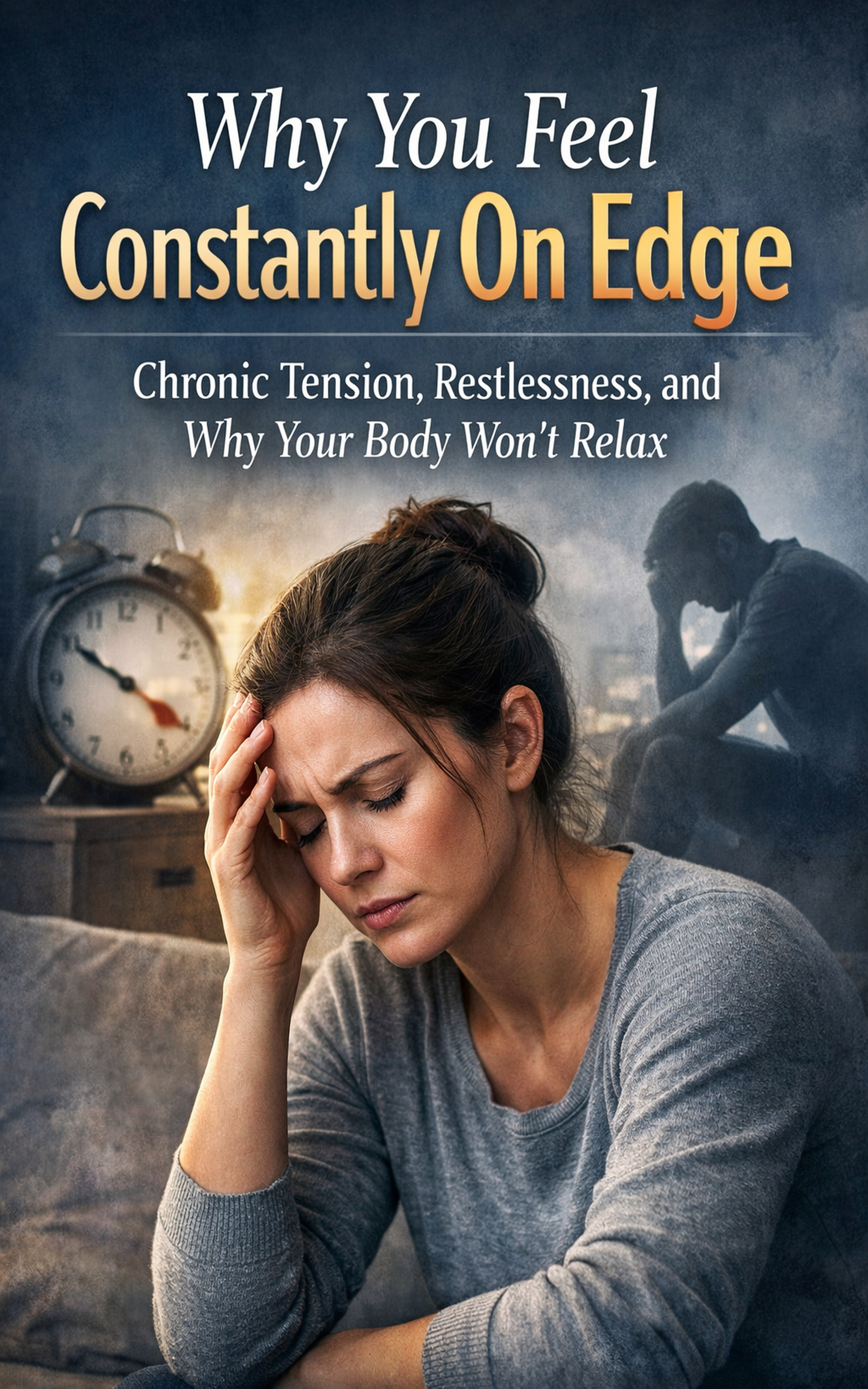
Some people look calm on the outside but feel tight and vigilant underneath. Your shoulders stay raised, your breathing stays shallow, and your attention keeps checking for what might go wrong next.
Being on edge can become a default after long periods of pressure. Even when life is manageable, your body may stay braced, because it learned that readiness is safer than softness.
This book explains the everyday patterns that keep that state running, then offers small, practical shifts that help you lower baseline tension over time. The approach is non clinical and designed for real days, not perfect routines.
- Understand why your body can stay alert even when your mind wants to relax.
- Learn how scanning, urgency, and over preparing keep tension switched on.
- Recognize the common triggers that make you feel wired during ordinary moments.
- Learn small signals of safety that reduce bracing without forcing calm.
- Recognize how to build recovery that is gradual, repeatable, and realistic.
Overview
Feeling on edge is not always about fear. It can be a body pattern where tension, vigilance, and urgency become normal, so stillness feels unfamiliar and small things feel louder than they should.
This guide helps you identify what keeps the pattern running, then apply small changes that teach your system it is safe to soften. The goal is steadier baseline ease, not a sudden switch to perfect calm.
Who this book is for
This is for you if you often feel tense for no clear reason. You may be easily startled, impatient with interruptions, or unable to fully settle, even during downtime.
It is also for people who live with constant responsibility. If your body stays ready and your mind keeps scanning, this book gives you a calmer way to understand the pattern and reduce it without pushing yourself harder.
How to use this book
Read it in short sections and test one change at a time. The aim is steady repetition, using the same small cues and checks whenever you notice bracing, restlessness, or urgency.
Start with the chapter that matches your main experience, physical tension, mental scanning, irritability, or the feeling of waiting for something bad. Keep your steps small, so your system can learn the new baseline.
What you will learn
- Why constant tension can persist after stress ends, and what keeps it reinforced.
- How scanning, urgency, and over preparing become habits that feel like personality.
- How to separate real threats from learned alertness in ordinary situations.
- Simple ways to lower stimulation and reduce false urgency during the day.
- Small body based signals of safety that soften bracing without complex techniques.
- How to recover after spikes, so a rough day does not reset your baseline.
- How to build a gentle plan that increases rest capacity over time.
Frequently asked questions
Is this a calm down program or a guarantee
No. This is an informational guide with practical tools and exercises. It aims to help you understand what keeps you tense and how to reduce baseline alertness over time, not to promise a specific outcome.
Is this clinical, medical, or therapy based
No. The language and approach are non clinical. The focus is on everyday patterns, attention, habits, and practical changes you can test in daily life.
What if I feel on edge even when nothing is wrong
That is common when your system has learned readiness. The book helps you map the cues that keep you braced, then add small signals that make ordinary moments feel safer again.
What if irritability and low patience are part of it
The book explains how tension reduces tolerance and makes interruptions feel like threats. You will learn short pauses and resets that lower intensity before you react.
What if my body is tense but my mind feels tired
You will learn how the wired body, tired mind pattern forms and how to unwind it gradually. The goal is to create recovery steps that work even when energy is low.
Is this suitable if I want simple steps, not complicated techniques
Yes. The practices are designed to be short and repeatable. You can use one small change at a time and build from there.
Get the book
Available on Amazon in ebook and paperback formats.