Why You Feel Behind in Life
Understanding Comparison, Pressure, and How to Redefine Progress Without Burning Out
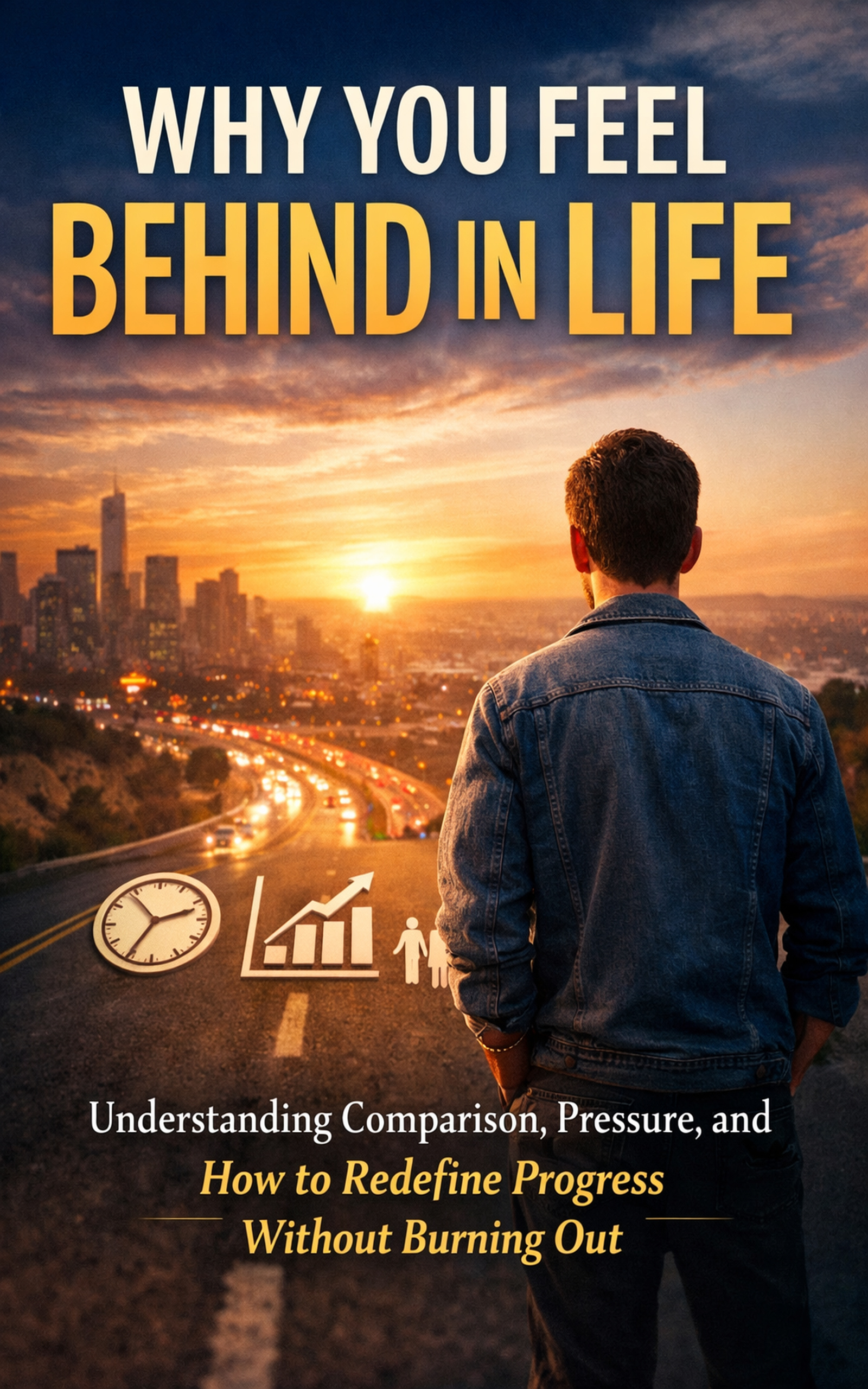
Feeling behind is often less about one missed goal and more about a constant sense that time is running out. You can be busy, responsible, and trying hard, yet still carry an uncomfortable urgency that never fully switches off.
This book explains the everyday drivers that create that pressure, comparison loops that hide your progress, external timelines that tell you when you should be done, and the gap between effort and visible outcomes.
Instead of pushing you to do more, it offers a calmer way to measure progress, build feedback you can trust, and move forward without relying on burnout. The approach is practical and non clinical, designed for real life constraints.
- Understand why the “behind” feeling can persist even when you are making progress.
- Learn how comparison speeds up and distorts what you notice about your own life.
- Recognize common timeline scripts that create pressure without providing direction.
- Learn a simple progress check to choose your next step without panic.
- Recognize how to build feedback loops that make effort feel connected to outcomes again.
Overview
“Behind” is not always a fact, it is often a lens. When your attention is trained on gaps, timelines, and other people’s visible milestones, your own movement becomes hard to see and easy to dismiss.
This book breaks down the patterns that create that lens, then shows practical ways to reset your measures of progress. The goal is not to force confidence, it is to build clarity you can return to when pressure and comparison spike.
Who this book is for
This is for you if you keep feeling late, even when you are trying. You notice milestones, ages, titles, income, relationships, and life markers, and your mind translates them into urgency about where you “should” be.
It is also for people who work hard but struggle to feel progress. If you keep moving the goalposts, discounting wins, or repeating “I should be further by now,” the chapters help you understand why that happens and what to do next.
How to use this book
Read it in short sections and apply one tool at a time. The value comes from repetition, using the same checks and prompts whenever the “behind” feeling returns, not from finishing everything at once.
Start with the chapter that matches your main trigger, comparison, timeline pressure, or effort without payoff. Keep notes simple. The aim is to create a steady method for deciding what matters now and what can wait.
What you will learn
- Why the mind can treat time as a threat, and how that changes your decisions.
- How comparison loops start, accelerate, and hide your real progress.
- Why social media can intensify the loop, and why it is rarely the only cause.
- How external timelines form, and how to replace them with a personal timeline you can use.
- Why effort and outcome drift apart, and how to evaluate whether your effort is useful.
- How to design feedback loops that make progress visible and repeatable.
- How to use small routines and limits so progress does not depend on overextending yourself.
Frequently asked questions
Is this a guarantee that I will stop feeling behind
No. This is an informational guide that explains common patterns and offers practical ways to respond. It is designed to improve clarity and reduce pressure, not to promise a specific outcome.
Is this clinical, medical, or therapy based
No. The language and tools are non clinical. The focus is on everyday thinking patterns, attention, habits, and practical decisions.
What if I am behind in one real area of life
The book does not deny reality. It helps you separate facts from pressure, choose a workable target, and build feedback so your effort is directed rather than reactive.
What if comparison is my main trigger
That is common. The comparison chapters explain how the loop works and give simple interruptions, including ways to adjust inputs and rebuild a more accurate view of your own progress.
What if I keep moving the goalposts
The book covers why wins stop counting and how standards can silently rise. You will learn how to set measures that stay stable, so progress does not disappear the moment you reach it.
Can I use this if I have very little time or energy
Yes. The tools are designed to be short and repeatable. You can use one progress check or one prompt at a time, then return to it when you need it.
Get the book
Available on Amazon in ebook and paperback formats.