Why You Can’t Stop Replaying the Past
Why Old Moments Keep Looping and How to Loosen Their Grip
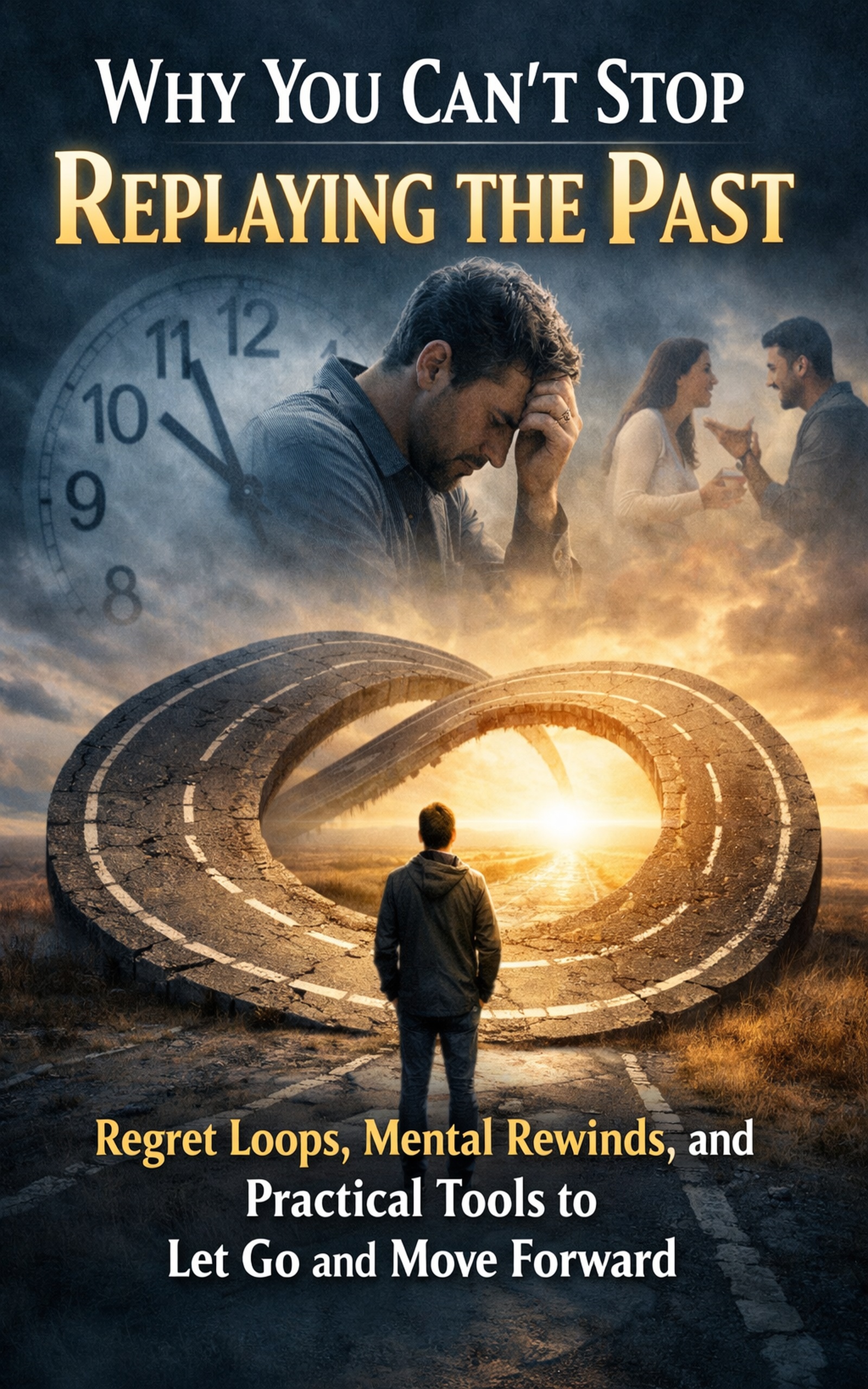
You replay conversations, decisions, and small moments long after they are over. Your mind revisits what you said, what you meant, and what might have gone differently.
The replay can feel automatic. Even when you want to move on, your attention keeps returning to the same scene, as if one more run through will finally make it feel settled.
This book breaks down why the mind gets stuck in mental reruns, what keeps the loop powered, and how to step out of it gently without trying to force your thoughts to stop.
- Understand why the mind replays the past instead of releasing it.
- Learn how rumination can masquerade as problem solving.
- Recognize the triggers that restart old mental loops.
- Learn ways to disengage from replay without suppressing thoughts.
- Recognize how to shift attention without fighting your mind.
Overview
Replaying the past is rarely about the past itself. It is your mind trying to resolve discomfort, regain control, or protect you from repeating a mistake, even when no action is possible now.
This guide helps you spot what keeps the replay cycle running and practice small shifts that lower its urgency. The aim is a quieter relationship with memory, not forced closure or perfect calm.
Who this book is for
This book is for you if your mind keeps returning to the same past moments. You may replay conversations, regrets, missed chances, or scenes that still feel unfinished.
If you keep thinking, I should be over this by now, but it keeps coming back, this guide will help you understand the mechanism and loosen it without forcing yourself to forget.
How to use this book
Read it in short sections and try one shift at a time. Use the ideas when you notice replay starting, rather than waiting for a perfect moment to reflect.
Pick the chapter that matches your main loop, conversations, regret, embarrassment, or what if thinking. Repeat the same small steps, so your attention learns a new default.
What you will learn
- Why certain memories stay active and keep demanding attention.
- How rumination differs from reflection, and how to tell the difference quickly.
- How regret loops and rehearsal loops use the same mental fuel.
- How to interrupt replay without arguing with the thought.
- Simple ways to reduce the emotional charge that keeps the loop sticky.
- How to stop searching for the perfect conclusion and accept enough clarity.
- How to build habits that make replay less frequent over time.
Frequently asked questions
Is this about stopping thoughts completely
No. The goal is to change your relationship with replay, so it loses urgency and takes up less space.
What if the memory feels important and unfinished
The book shows how the mind treats discomfort as unfinished business. You will learn how to separate useful reflection from endless review.
What if I keep replaying conversations and what I should have said
You will learn how rehearsal loops work and how to step out of them with short, repeatable redirects that do not require willpower.
Is this clinical, medical, or therapy based
No. It is a non clinical guide focused on everyday thinking patterns and practical ways to respond.
What if many different memories keep looping
The approaches target the underlying pattern, not each specific memory. You can apply the same steps across different themes.
What if replay shows up at night or when I am trying to rest
The book includes ways to reduce mental friction and lower stimulation, so rest does not become another arena for review.
Get the book
Available on Amazon in ebook and paperback formats.