Stop Overthinking at Night
How to Calm Racing Thoughts, Reduce Night Anxiety, and Sleep Better
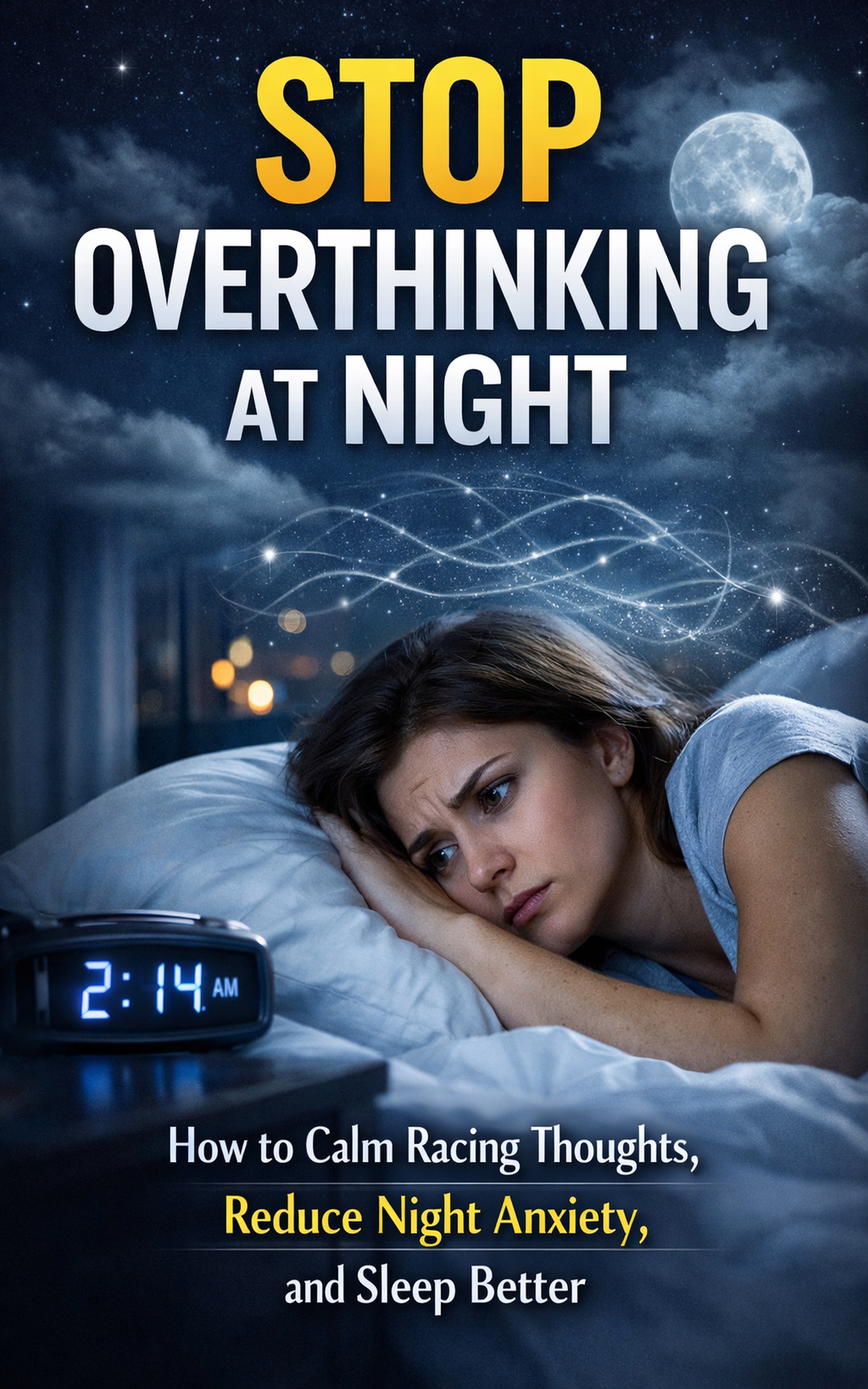
This book is for nights when your mind gets louder the moment things go quiet. You try to sleep, but thoughts keep returning, replaying the day, scanning for what you missed, or planning tomorrow as if it is urgent.
It explains why overthinking often peaks at night, reduced distractions, unfinished tasks that keep pulling for attention, and the way the brain treats uncertainty as something to solve before you rest.
Instead of forcing thoughts to stop, you will learn how to reduce the mental pressure that keeps them looping. The approach is practical and non clinical, designed for real nights when energy and patience are low.
- Understand why quiet and attention gaps can amplify thinking after lights out.
- Learn how unfinished tasks and open loops can keep returning until they are contained.
- Recognize how biological timing and physical states can make worries feel more urgent.
- Learn simple ways to redirect attention without arguing with your thoughts.
- Recognize patterns that turn one thought into an hour of replay and planning.
Overview
Overthinking at night is common because the conditions change. When external input drops, your attention has room to drift, and the mind often fills that space with review, worry, and problem solving.
This book breaks down the main drivers that make nighttime thoughts feel intense, then shows practical ways to respond. The goal is not perfect quiet in your head, it is a calmer process that helps you return to rest more easily.
Who this book is for
This is for you if sleep is not the hard part, letting your mind stand down is. You lie in the dark and your brain starts running meetings, replaying conversations, or listing what could go wrong tomorrow.
It is also for people who wake in the night and then feel trapped by thinking. If you notice clock checking, mental debates, or sudden urgency about ordinary problems, the chapters help you understand why that happens and what to do next.
How to use this book
Read it in the daytime, not at 2am. The ideas work best when you practise a few small changes before bed, then use the same responses when thoughts show up at night.
Start with the sections that match your pattern, open loops from the day, worry spirals, or repeated night waking. Keep each step short. The aim is to create a predictable way to handle thoughts, so bedtime is less of a negotiation.
What you will learn
- Why reduced distractions can make your mind feel busier, not quieter.
- How incomplete tasks and unresolved decisions create cognitive residue that keeps looping.
- How biological timing and physical state, like caffeine, hunger, or discomfort, can amplify thinking.
- How to use short planning and containment steps so worries stop circling at bedtime.
- How to build simple cues, routines, and attention anchors that make it easier to settle again after waking.
Frequently asked questions
Is this a sleep program or a guarantee
No. This is an informational guide that explains common night thinking patterns and offers practical ways to respond. Results vary, and there are no promises.
Do I need to read this during the night
No. It is best read during the day. At night, use the short steps you have already chosen, then return to rest rather than studying.
Is this clinical, medical, or therapy based
No. The language is non clinical. The focus is on everyday patterns, attention, routine, and practical adjustments that many readers can try safely.
What if my thoughts are about work, mistakes, or tomorrow
That is common. The book covers replay, prediction, and open loops, and shows how to contain what matters without turning bedtime into a planning session.
What if I wake up at the same time every night
The book does not claim to fix sleep issues. It explains why repeated waking can become a thinking trigger, and offers ways to reduce the spiral when it happens.
Is this suitable if I do not want complicated techniques
Yes. The steps are designed to be simple, short, and repeatable. You can use the parts that fit your situation and skip anything that does not.
Get the book
Available on Amazon in ebook and paperback formats.