Stop Overthinking at Night When You Need to Sleep
What to do at 2am when your brain will not shut off and tomorrow cannot wait
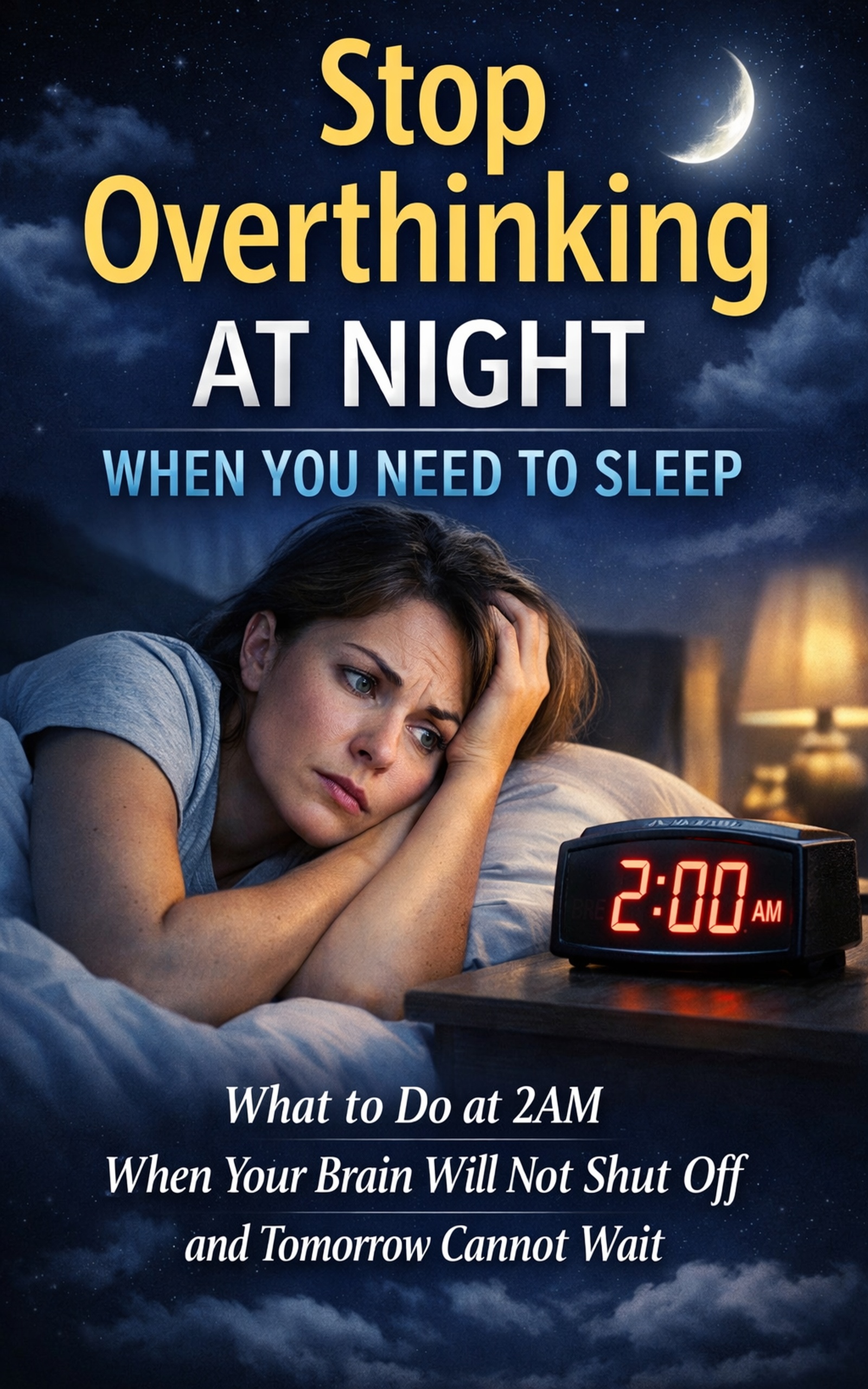
This book is for nights when you wake up and your mind immediately starts working. In the quiet, unfinished problems and future scenarios can feel urgent, and trying to force sleep can make the loop stronger. The book explains why overthinking intensifies at night, then gives you a simple sequence for what to do in the moment so you can reduce escalation and leave decisions for the morning.
It is written for real night conditions, low patience, low energy, and limited attention. Instead of asking you to analyse your thoughts, it focuses on small, practical actions that reduce urgency and stimulation. The tone is calm and non clinical, and it avoids promises or big claims.
If you recognise patterns like clock checking, replaying conversations, building tomorrow’s plan, or mentally reviewing everything you still need to do, this guide gives you a clearer way to respond. It helps you stop feeding the loop so rest becomes easier to allow.
- Understand why night time quiet and pressure amplify thinking.
- Learn what to do in the first minutes after waking up.
- Recognise common loops, replaying, planning, forecasting.
- Use short resets that reduce escalation without requiring willpower.
- Know when a brief, low stimulation break can help you return to rest.
- Learn how to defer problem solving without suppressing or arguing with thoughts.
- Understand what makes a night spiral worse, and what makes it easier to settle.
Overview
Night overthinking is a predictable response to tired attention, low stimulation, and next day pressure. The book breaks down why thoughts feel louder at night and why urgency can make your brain more alert, not more sleepy.
The approach is calm, grounded, and non clinical. It does not promise sleep. It focuses on reducing escalation and pressure, so returning to rest becomes easier to allow.
Who this book is for
For people who can fall asleep, but wake up during the night and struggle to switch off again. Especially if your thoughts turn practical and urgent once everything goes quiet.
If you find yourself planning tomorrow, replaying conversations, mentally solving problems, or checking the clock, this book gives you a clearer way to respond in the moment without turning the night into a battle.
How to use this book
Read it once during the day, then use it at night in short pieces. The sections are written to be simple enough to remember when you are tired, with quick reminders you can return to after a night waking.
The goal is not to do complicated mental work at 2am. It is to follow a clear sequence, reduce stimulation and urgency, and postpone problem solving until you have more capacity.
What you will learn
- Why tired brains have less control over attention and thoughts.
- Why night thoughts can feel more convincing, even when they are not more accurate.
- What to avoid when your mind is loud, including long internal debates and high stimulation distractions.
- How to use short self talk cues that reduce urgency and create distance from the loop.
- How to contain worries so they do not take over the rest of the night.
Frequently asked questions
Is this a sleep program or a guarantee
Do I need to read this during the night
Is this clinical, medical, or therapy based
What if my thoughts are about work, mistakes, or tomorrow
What if I wake up at the same time every night
Is this suitable if I do not want complicated techniques
Get the book
If you want a clear, non clinical way to handle 2am overthinking without forcing sleep, this guide gives you a practical starting point and a repeatable response you can return to.