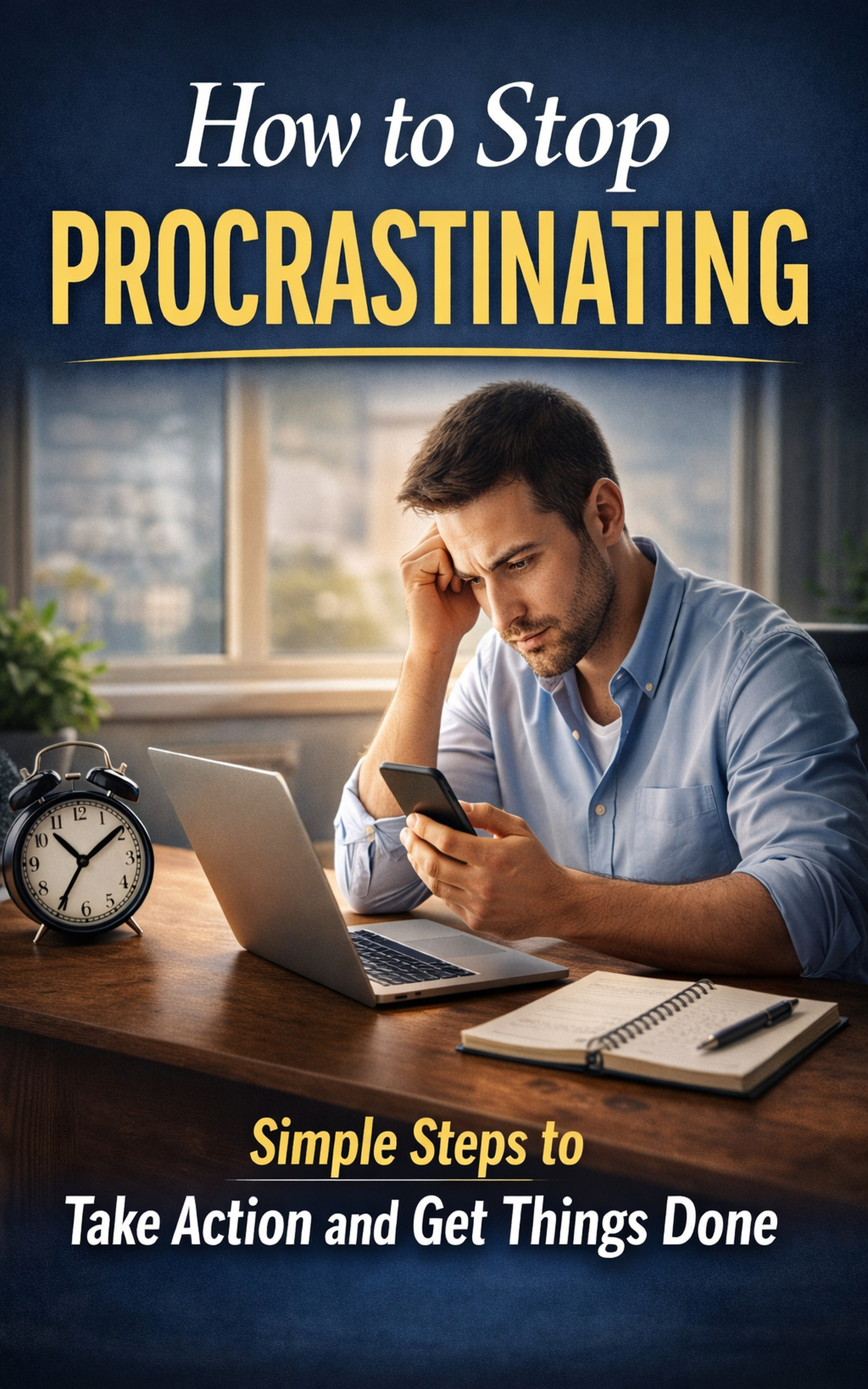
How to Stop Procrastinating
Simple Steps to Take Action and Get Things Done
This book is for people who delay even when they care about the task. You may know what needs doing, yet still find yourself scrolling, tidying, researching, or waiting for the right mood before you begin.
It explains procrastination as a short term feel better move. When a task feels unclear, demanding, or easy to judge, avoidance can lower discomfort for a moment, even while consequences grow in the background.
From there, the book helps you identify your pattern and build a practical way to start, focus, and finish. The steps are simple and repeatable, designed for real days when energy and motivation vary.
- Understand why procrastination often shows up as relief, not laziness.
- Learn how to spot the task features and triggers that invite delay.
- Recognize your pattern using short tracking and decision questions.
- Learn ways to start with micro steps and time boxes that reduce resistance.
- Recognize how environment and distractions shape follow through.
Overview
Procrastination usually has a logic. It appears when the task creates discomfort, uncertainty, or pressure, and delay offers quick relief. That relief is real, even when it causes problems later.
This book breaks procrastination down into understandable parts. It covers what it looks like in daily life, why it feels tempting in the moment, and how to change the conditions that keep you stuck. You will work through identifying triggers, starting with smaller steps, protecting focus, building momentum, and finishing more consistently over time.
Who this book is for
This is for you if you often delay tasks that matter, then feel stressed, rushed, or disappointed with yourself. You may be productive in some areas, yet avoid specific types of work, especially when the next step feels vague or high stakes.
It is also for people who start late, then sprint to catch up. If your weeks swing between avoidance and frantic effort, the chapters help you understand why that pattern repeats and how to design a steadier approach.
How to use this book
Start with understanding your pattern, then move into the sections that match your main problem. If you struggle to begin, use the micro start and time box ideas first. If you begin but drift, go to focus and distraction. If you stall near the end, use the finishing and completion sections.
Try one change at a time. The book encourages testing and adjusting, so you can keep what works for your situation and drop what does not.
What you will learn
- How procrastination functions as short term relief, and why that relief reinforces the habit.
- How to identify task features that invite delay, such as ambiguity, friction, or high perceived stakes.
- How to run a simple tracking log to notice triggers, timing, and common detours.
- How to turn moments of delay into decision points using clearer questions.
- How to start with micro steps, short timers, and small start rituals that lower resistance.
- How to design your space and defaults so the easy choice supports the task.
- How to manage distractions and protect focus blocks, both digital and environmental.
- How to build momentum with small wins, routines, and simple tracking.
- How to plan for completion, set limits, and recover after setbacks without giving up.
Frequently asked questions
Is this book a guarantee that I will stop procrastinating
No. This is an informational guide with practical strategies and examples. Results vary and depend on your situation and consistency.
Is this book for students, professionals, or both
Both. The examples and patterns apply to school, work, and personal projects. You can adapt the steps to the tasks you are avoiding.
Do I need special tools or apps
No. The book focuses on simple steps you can do with basic tools such as a notebook, a timer, and a clear task list.
What if my problem is starting, not finishing
The book includes sections on micro starts, time boxes, and start rituals. These are designed to reduce resistance and make the first step easier.
What if distractions keep pulling me away
There are chapters on managing environmental and digital distractions, protecting focus blocks, and handling interruptions. The aim is to make focus more likely, not perfect.
Is the tone clinical or therapy based
No. The language is grounded and non clinical. It focuses on everyday patterns, practical adjustments, and repeatable routines.
Get the book
Available on Amazon in ebook and paperback formats.