How to Regain Mental Clarity When You Are Emotionally Exhausted
When Your Mind Feels Foggy, Slow, and Overloaded
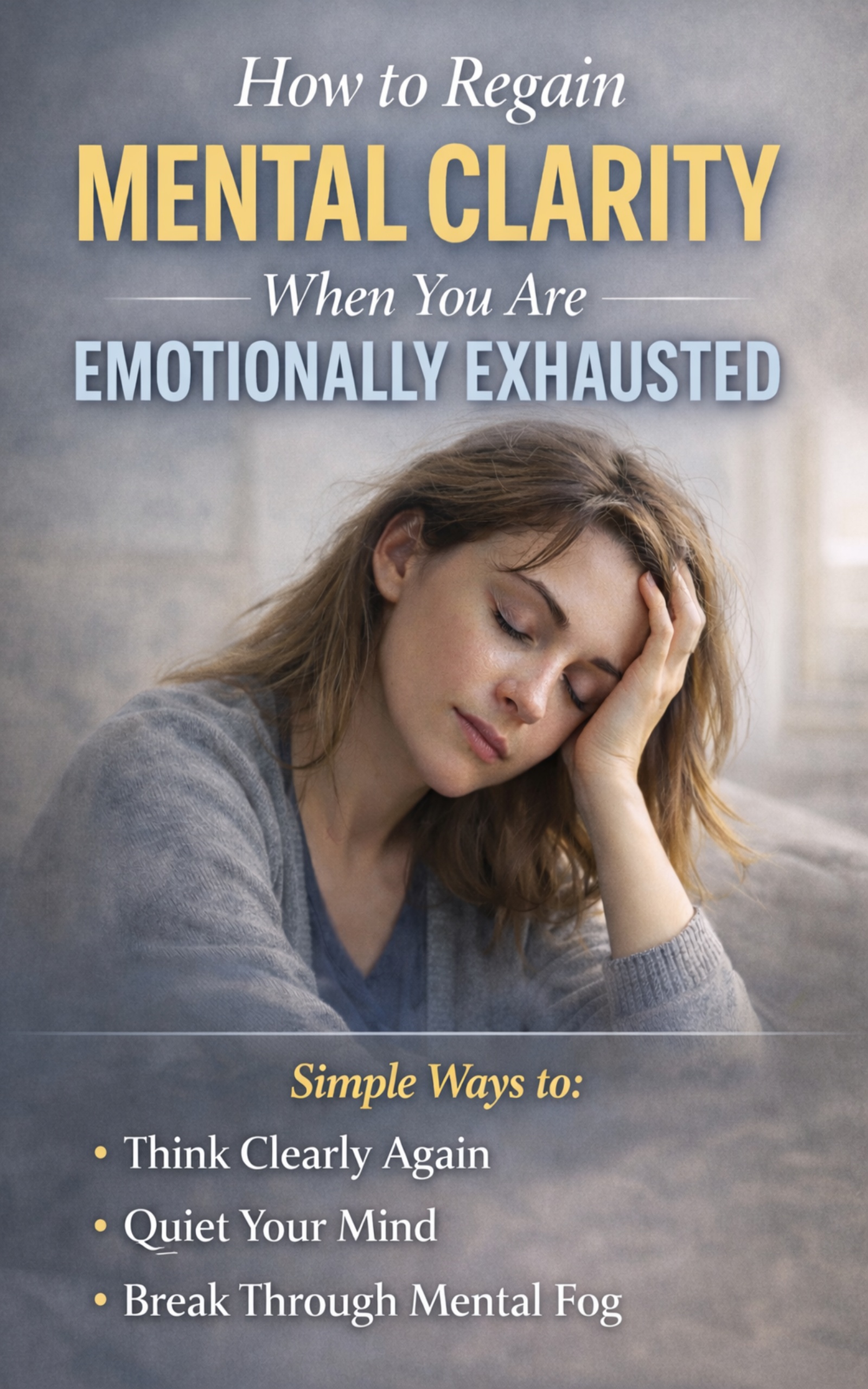
Emotional exhaustion often looks like a thinking problem. You lose words, forget small steps, reread the same message, and feel overwhelmed by choices that used to be simple. The fog is not a personal failure, it is what happens when attention and working memory are carrying too much. This book explains why clarity drops when your emotional load stays high, and it gives practical ways to reduce mental noise. You will learn how to protect attention, cut decision load, and build low effort routines that help your mind feel usable again.
- Understand why emotional load changes attention, memory, and focus.
- Learn how to reduce mental fog by lowering inputs and open loops.
- Recognize the difference between pushing through and draining capacity.
- Use simple clarity resets and decision rules for low bandwidth days.
Quick tools
- Do a short reset. Stop, slow your breathing, then choose one next action that takes under five minutes.
- Use an external brain. Write down what is pulling at you, pick one item, then park the rest with a time to return.
- Reduce input for one hour. Silence non essential alerts, limit tabs, then finish a single small task.
Overview
When you are emotionally exhausted, your mind can feel crowded and slow. You may struggle to find words, lose your place mid task, and feel pressure from tiny decisions. It can look like procrastination or poor discipline, but it is often a capacity issue.
This book breaks down what changes in the brain under ongoing stress and emotional load, including attention shifts, working memory strain, and the way worry keeps interrupting you in the background. It then turns that into practical steps, so you can reduce mental noise, simplify your day, and rebuild clarity without forcing yourself into a bigger crash.
Who this book is for
This book is for people who can still function, but feel mentally foggy and easily overwhelmed. You might be doing the basics, yet everything takes more effort than it should, and your brain does not recover between demands.
- People who feel scattered, forgetful, or slow after a long stretch of stress.
- People who avoid decisions because choosing feels draining.
- People who start tasks, then lose momentum and switch to something else.
- People who feel guilty for not coping “better,” even though they are depleted.
- People who want simple, realistic tools that work on low energy days.
How to use this book
Read it in order if you want a clear map of what is happening to attention and memory under emotional load. If you need immediate relief, start with the reset tools and the decision supports, then return to the deeper explanations when you have more space.
Keep the changes small. Choose one clarity reset, one input boundary, and one decision rule to try for a week. Repeat is the point. When your capacity is low, consistency matters more than intensity.
- Use the “signs of fog” section to name what is happening, without self blame.
- Use short time limits for thinking tasks, so you do not get stuck circling.
- Batch decisions, plan once, then follow the plan when you can.
- Build external supports, lists, templates, and defaults that reduce strain.
What you will learn
- Understand why emotional exhaustion steals clarity, even when you are trying hard.
- Learn how attention shifts under stress and why neutral tasks feel harder.
- Recognize how working memory fills up and why you keep losing your place.
- Learn why background worry interrupts focus and how to reduce it.
- Use practical ways to cut decision load with rules, defaults, and checklists.
- Build capacity based planning that matches what you can do today.
- Create recovery routines that support sleep, steadier mood, and clearer thinking.
FAQ
Why do I feel foggy even when nothing “big” is happening?
Fog can come from accumulation. Ongoing pressure, unresolved concerns, and constant input can keep your nervous system alert. Over time, that reduces the space your mind has for focus, memory, and clean thinking.
Is this just decision fatigue?
Decision fatigue is part of it, but the book covers more than choices. It explains how attention gets pulled toward threat scanning, how working memory gets crowded, and why emotional load creates constant background interruptions.
What should I do when I cannot concentrate at all?
Start smaller than you think. Use a short reset, remove extra input, then pick one next action that is concrete and brief. The goal is not full productivity, it is restoring enough stability to move again.
Why do I keep rereading and double checking?
When capacity is low, your brain trusts itself less. You compensate by checking, rereading, and searching for certainty. The book shows how to reduce the triggers that create that loop and how to use external supports instead.
Will rest fix this on its own?
Rest helps, but clarity often improves faster when you also reduce the inputs and expectations that keep draining you. The book focuses on practical protection and rebuilding, not on pushing yourself harder.
Get the book
If your mind feels foggy and overwhelmed, this book gives you a clear explanation of why that happens under emotional load, plus small tools that reduce strain right away. You will build a simpler way to plan, decide, and focus, so your brain has room to recover.