Can’t Switch Off at Night
How to Stop Replaying the Day and Calm Your Mind
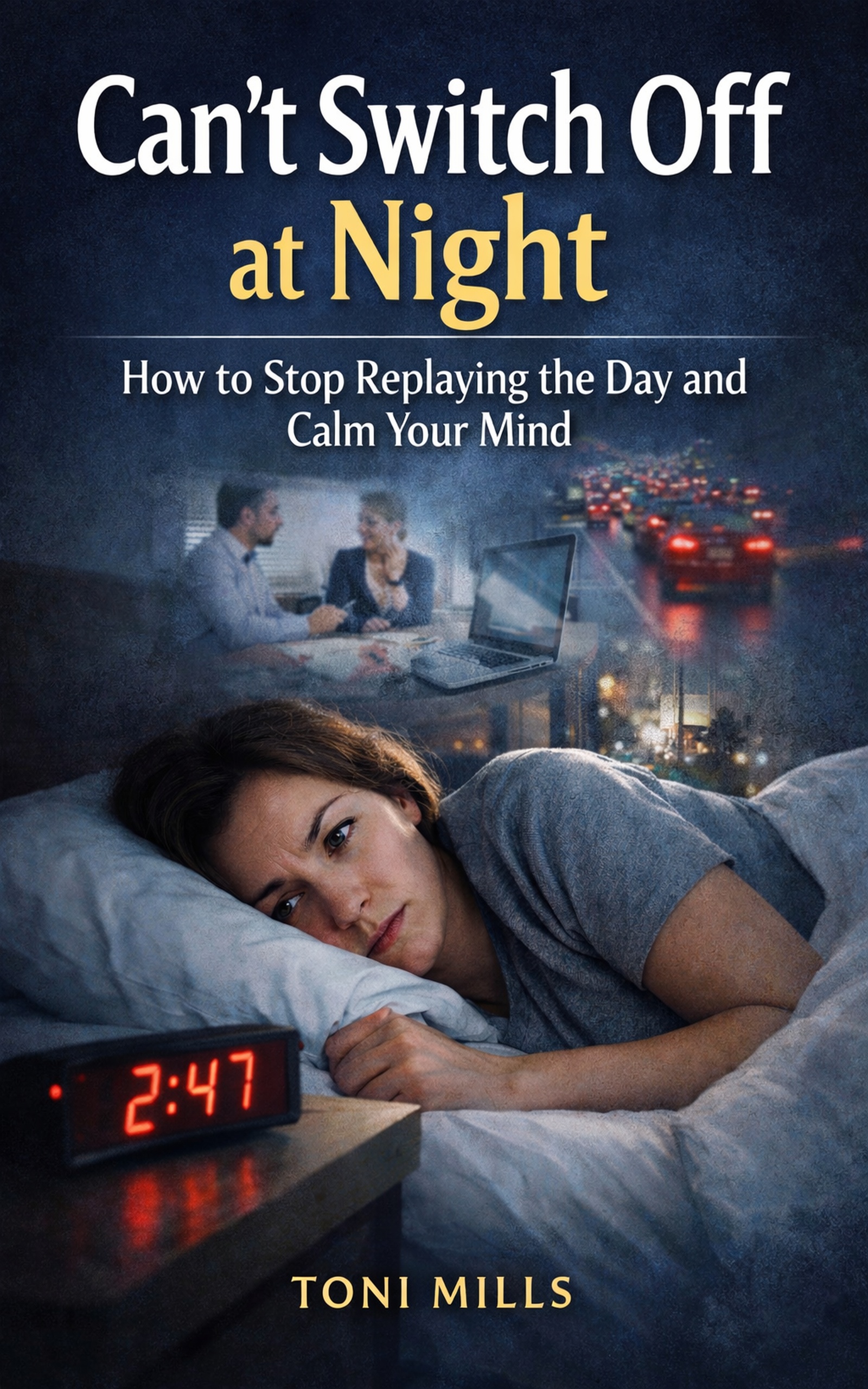
Night can feel like the only quiet moment you get, then your brain fills it with reviews. You replay conversations, recheck decisions, and run tomorrow in your head, as if thinking harder will create certainty and let you rest. This book explains why switching off is difficult when stress, unfinished loops, and habit patterns are still active. It gives practical ways to downshift your body state, limit rumination, and create enough closure for sleep to come back without forcing it.
- Understand why attention and memory change when the day finally goes quiet.
- Learn how stress signals turn normal thoughts into a replay loop at night.
- Recognize the habits that keep “processing” switched on in bed.
- Use short routines that offload open loops and signal the day is complete.
Quick close down routine
- Write three unfinished items, then add one next step for each, keep it small.
- Choose one fixed time tomorrow for planning, then stop planning tonight.
- Do a gentle downshift, slow breathing, loosen jaw and shoulders, soften your gaze.
Overview
When you try to sleep, your brain may treat the quiet as a chance to catch up. It brings forward unfinished tasks, emotionally charged moments, and worries that did not get processed during the day. Because you are tired, the mind often shifts into scanning and replaying instead of clear problem solving.
This book shows how the loop forms and why it feels urgent at night. It covers the role of body state, threat signals, and habit loops, then offers a calmer way to respond. You will use light structure, limits, and closure, so bedtime stops becoming a late night meeting with your thoughts.
Who this book is for
This book is for people who dread bedtime because it turns into mental work. If your nights are filled with day replays, imagined conversations, or planning that will not end, this is written for you.
- People who lie down and immediately start reviewing what happened earlier.
- People who wake during the night and get pulled into worry or rehearsal.
- People who try to force sleep, then feel more alert and frustrated.
- People with many open loops, responsibilities, or emotional carryover.
- People who want practical routines, not pressure or diagnosis language.
How to use this book
Read in order if you want the full explanation of why your mind stays active at night. If you need immediate help, start with the downshift tools and the closure routines, then return to the habit and stress chapters later.
Keep the tools small and repeatable. Choose one offload method, one boundary for rumination, and one body based downshift. Practice them even on good nights, so your brain learns a new pattern when a difficult night shows up.
- Use a short “parking lot” list to move loops out of your head and onto paper.
- Set a time limit for thinking, then switch to a neutral settling routine.
- Use simple scripts for worries, “Not now, I have a plan, I will revisit tomorrow.”
- Track what triggers your nights, stress, conflict, overload, or too much stimulation.
What you will learn
- Understand why the brain replays the day when distractions drop away.
- Learn how threat signals and stress chemistry amplify nighttime rumination.
- Recognize why forcing sleep can increase alertness and frustration.
- Learn how open loops and emotional charge keep pulling attention back.
- Use body based downshifts that reduce arousal at 2 a.m. without effort.
- Build closure routines that turn rumination into a bounded, finished task.
- Create simple habits that make evenings calmer and nights more predictable.
FAQ
Why does my mind get louder as soon as I try to sleep?
Quiet removes external input, so internal cues become more noticeable. If stress and unfinished items are still active, your brain treats bedtime as a chance to review and prepare. It is trying to create safety, but it uses the wrong mode for the hour.
Why does trying to force sleep make it worse?
Forcing often adds threat and urgency. You start monitoring whether you are falling asleep, then your body becomes more alert. A calmer approach is to downshift your body state and give your brain a clear signal that processing is finished for now.
What should I do when I wake at 2 a.m. and the loop starts?
Go smaller, not bigger. Use one short downshift, then one sentence of closure on paper, then return to a neutral settling routine. The goal is not solving life at night, it is reducing urgency and ending the loop.
Is it better to “think it through” so it is done?
At night, thinking often becomes scanning and replaying. Instead, convert the concern into a bounded task, write the next step, choose when you will revisit it, then stop. This gives the brain the closure it is seeking.
What if the thoughts are emotional, not practical?
Emotional charge keeps memories sticky. You do not need to process everything in bed. Use brief naming, a grounding downshift, and a closure cue that tells your brain it is safe to pause and return in daylight.
Get the book
If your nights have turned into replays, worry, and mental rehearsal, this book gives you a clear explanation of why it happens and what helps. You will learn how to calm the body, reduce rumination, and create simple closure, so sleep becomes possible again without a fight.