Burnout Recovery Guide
Simple Steps to Stop Feeling Drained and Overwhelmed
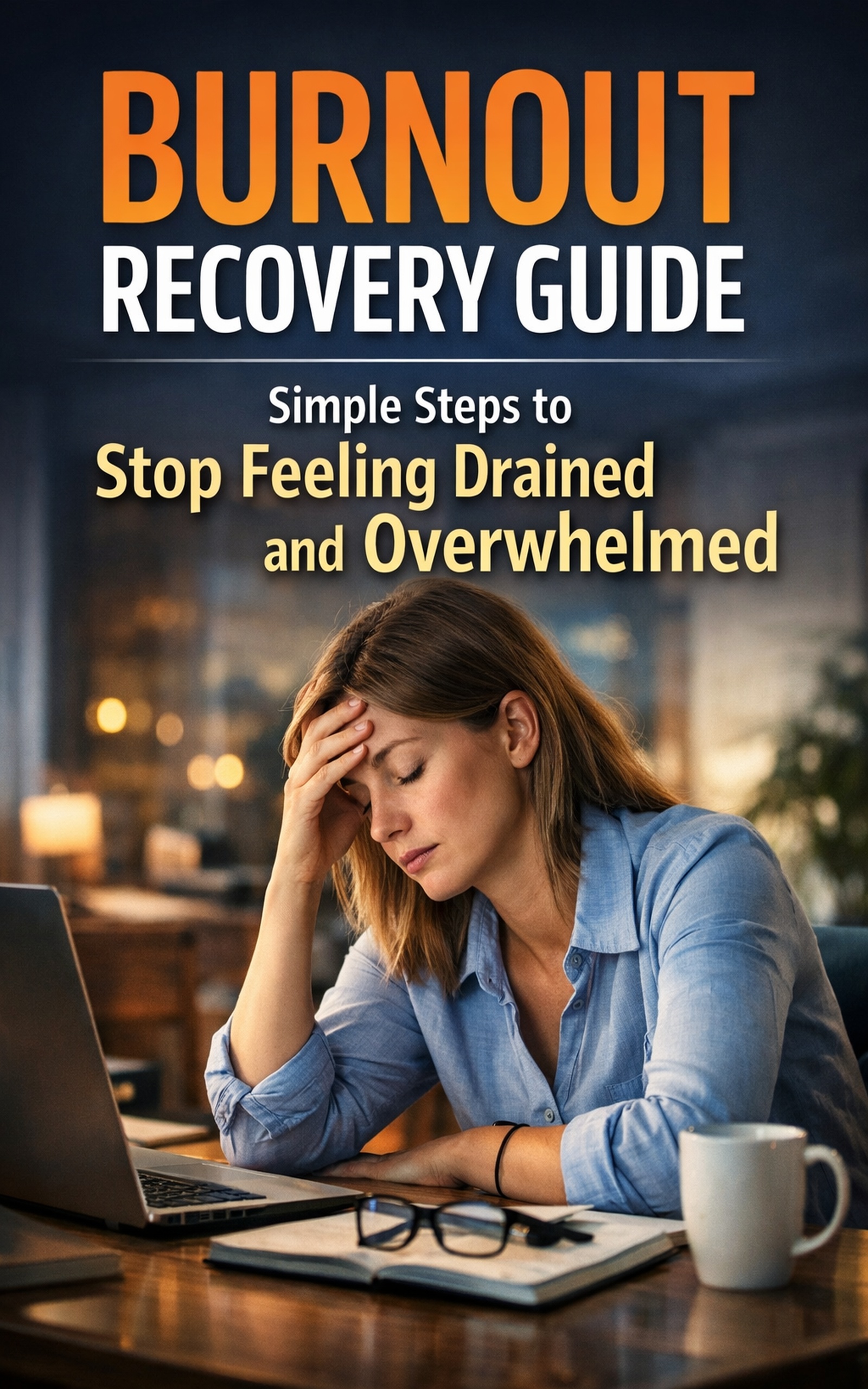
This book is for people who feel depleted in a way that normal rest does not fully repair. You can still function, but everything costs more, motivation drops, focus slips, and small tasks start to feel strangely heavy.
It explains burnout as a sustained overload state. Over time, constant demand, decision pressure, attention fragmentation, emotional effort, and elevated standards combine, and your system stops recovering between days.
The guide helps you map what is draining you, reduce the hidden work behind the work, and rebuild capacity in a realistic order. The approach is calm and practical, built for real life rather than extreme changes.
- Understand what burnout looks like in daily life, and how it differs from stress and ordinary tiredness.
- Learn why motivation, focus, and energy often drop together during sustained overload.
- Recognize common maintenance loops, such as decision fatigue, context switching, and constant mental load.
- Learn how to track drains and friction so recovery becomes clearer and more measurable.
- Recognize the role of boundaries and workload choices in preventing repeat crashes.
Overview
Burnout is not just being tired. It is what happens when demand stays high long enough that recovery stops keeping up. You might still be doing the same tasks, but the effort feels heavier, patience shrinks, and the results stop matching the energy you put in.
This guide breaks burnout into understandable mechanics, then walks through a practical recovery path. It covers how burnout builds, how it shows up in focus and motivation, how everyday systems can keep it going, and how to rebuild capacity with small steps that you can actually maintain.
Who this book is for
This is for you if you feel drained, flat, or worn down, and you are no longer sure what rest is supposed to do. You may be getting things done, but it feels like you are running on a thinner and thinner battery.
It is also for people who feel stuck between pressure and guilt. You try to push through, then crash, then blame yourself for not handling what you used to handle. The book helps you replace blame with a clearer map of demand, depletion, and recovery.
How to use this book
Start by reading the sections that define burnout and show how it differs from stress and ordinary fatigue. Then move into the chapters that explain the everyday mechanics, such as decision load, attention switching, emotional effort, and standards that creep upward.
Use the practical assessment steps to track your energy and identify repeated drains. After that, apply one change at a time, reduce friction, adjust workload choices, and build recovery routines that fit your current capacity.
What you will learn
- How burnout builds over time, and why it can be hard to notice early.
- How burnout differs from stress, depression, and physical fatigue, in everyday terms.
- Why motivation, focus, and energy often decline together under sustained overload.
- How daily energy budgeting, decision fatigue, and attention fragmentation reduce capacity.
- How emotional labor, perfectionism, scope creep, and elevated standards add hidden demand.
- How to map your burnout using a simple energy log, repeated drains, and friction points.
- How to reduce the tasks behind the tasks, and simplify decisions that drain you.
- How to rebuild recovery with sleep support, restorative blocks, and realistic routines.
- How to set boundaries and manage workload in ways you can maintain over time.
Frequently asked questions
Is this book clinical or medical
No. It is a practical, non clinical guide that explains burnout patterns and offers realistic steps for recovery and workload management.
Does this replace professional advice
No. This book is for education and self support. If you need medical or mental health care, seek appropriate professional help.
Do I need to take time off to use this book
Not necessarily. The approach is designed for real schedules. It focuses on capacity, reducing hidden demand, and making changes that can work even while you still have responsibilities.
What if I cannot tell whether I am burned out or just stressed
The book explains key differences and uses everyday markers, such as how long the overload has lasted, how well rest works, and how motivation and focus have changed over time.
Is this about quitting your job or making big life changes
No. The book avoids extreme advice. It focuses on stabilizing your baseline, changing daily mechanics, and setting boundaries you can maintain.
How quickly should I expect change
Burnout is typically a buildup, and recovery is usually gradual. The book focuses on steady steps, tracking what helps, and reducing repeat crashes.
Get the book
Available on Amazon in ebook and paperback formats.